Technique · 4 min read
Ishkor: the blue of Rishtan
A desert plant, burned to ash and ground with quartz, is the whole secret of a colour eight centuries old.
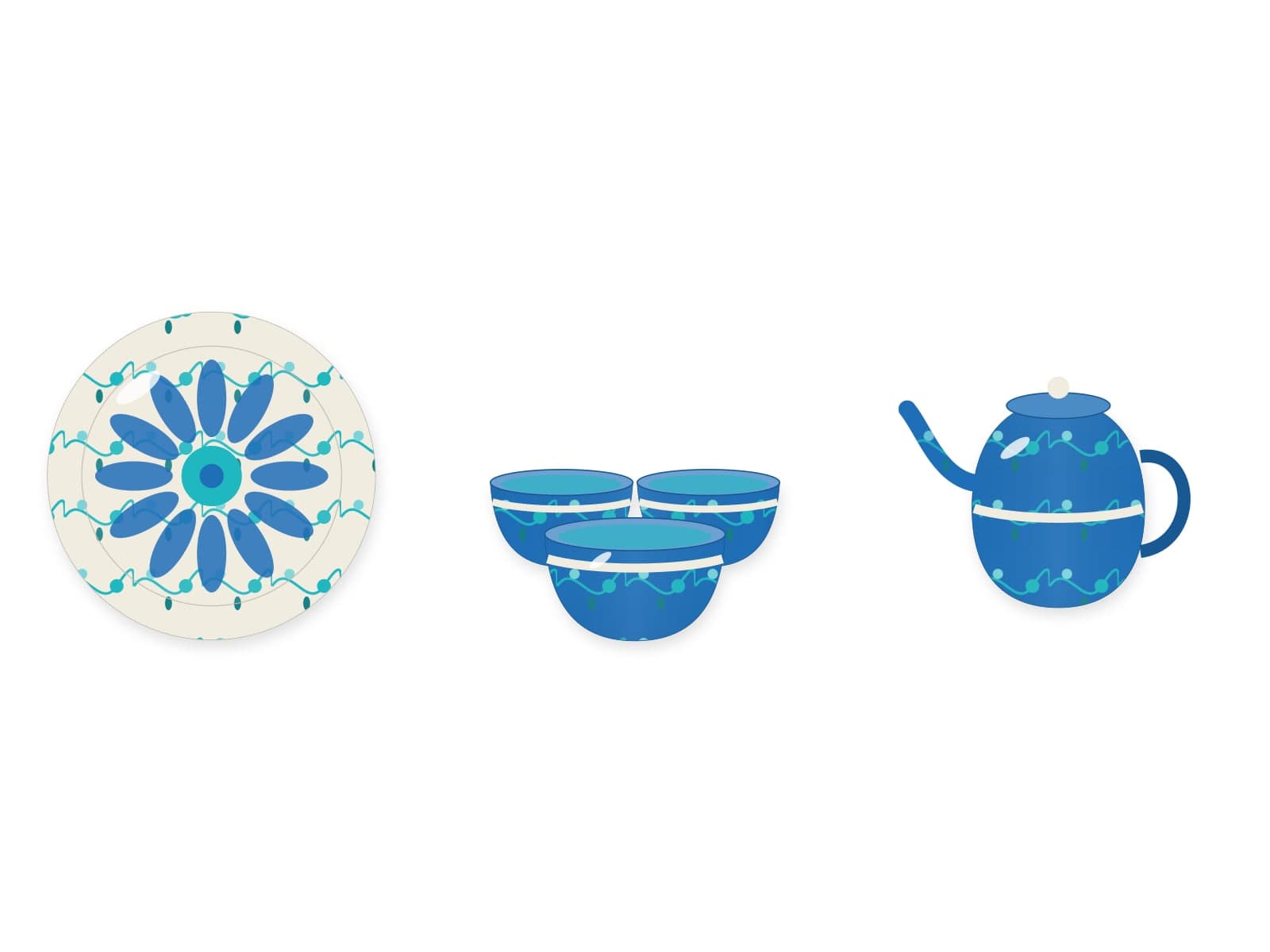
Rishtan sits on a seam of red clay in the Fergana Valley that potters have worked since the twelfth century. What made the town famous, though, is not the clay but the glaze: ishkor, made from the ash of a salt-tolerant shrub that grows on the edge of the Kyzylkum desert.
The ash is burned in pits, ground with quartz sand, and mixed with water into a slurry that looks like nothing at all. Fired once at around 1000 °C, it turns the mineral pigments beneath it into a turquoise that shifts toward lapis as the light moves.
Usto Alisher Nazirov's kiln still fires this way. Plates are thrown on a kick wheel, dried in the courtyard, painted freehand in a single sitting, and fired once. There is no second chance and no two are alike.
Ceramic tableware

Technique
Ikat: the cloth that remembers